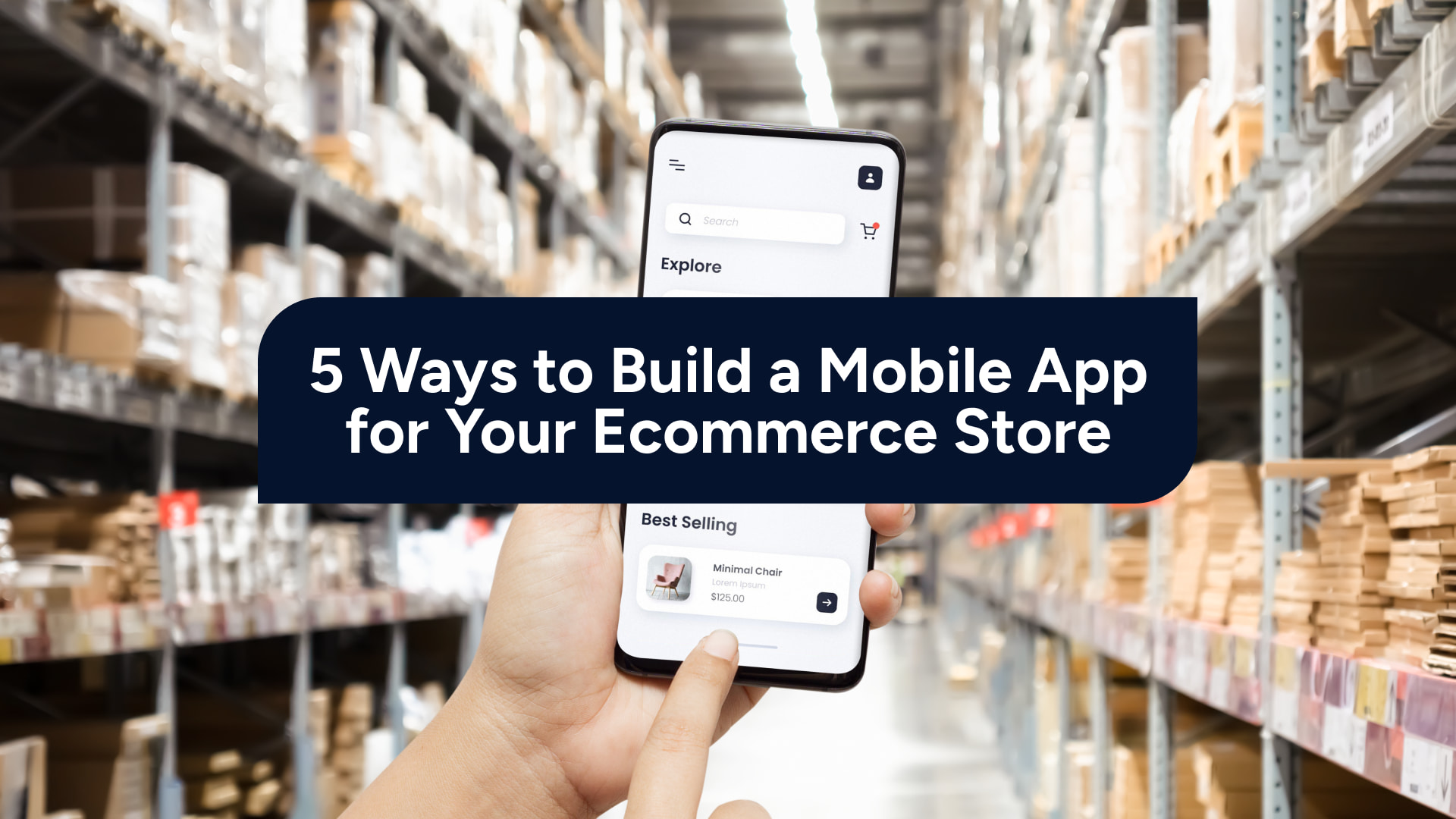
Effective Strategies for Developing a Mobile App for Your E-commerce Business
Mobile applications have transitioned from optional add-ons to essential tools for growth in today’s digital marketplace. With consumers increasingly shopping via their smartphones, establishing a dedicated app can significantly enhance customer engagement and loyalty. As acquiring new customers becomes more costly, nurturing your existing base through a branded mobile app offers a competitive advantage. Moreover, the accessibility of app development tools now allows small and medium-sized brands to create their own mobile experiences without the need for massive budgets.
Building a mobile app isn’t a one-size-fits-all process; choosing the right approach requires understanding the options, their benefits, and potential pitfalls. With over a decade of experience in mobile app development, we’ve seen firsthand how improper planning can lead to inflated costs and missed opportunities. In this guide, we’ll explore five distinct pathways to creating a mobile app for your e-commerce store, helping you identify the most effective strategy for sustainable ROI.
Why Your Business Benefits from a Dedicated Mobile App
If your brand sells directly to consumers without a mobile app, you’re effectively leaving revenue on the table. Customers expect seamless, fast, and engaging shopping experiences—especially on mobile devices. Over 70% of e-commerce traffic originates from smartphones, and younger generations like Gen Z and Millennials predominantly shop via their phones.
Providing a mobile app elevates this experience by offering a streamlined, intuitive interface that mirrors or even surpasses your website’s functionality. Unlike a browser-based mobile site, an app can deliver faster load times and enhanced features, such as personalized notifications and easy access to your brand’s icon on the home screen. This persistent presence keeps your brand top of mind and enables direct communication through push notifications, which are highly effective in nurturing customer loyalty.
Push notifications are not only quick and visible but also cost nothing to send. They are especially valuable for engaging your most active users—those likely to become repeat buyers. The goal isn’t solely to attract new customers but to deepen relationships with your existing high-potential segments, maximizing their lifetime value.
Five Approaches to Building and Launching a Mobile Shopping App
Deciding how to develop your app is crucial. The wrong choice can lead to overwhelming costs, technical debt, and distraction from core business activities. The key is to balance investment with manageable ongoing maintenance, ensuring your app integrates smoothly with your website.
Below, we outline five different development strategies, weighing their advantages and disadvantages, and highlighting which options to consider or avoid.
1. Convert Your Site into a Progressive Web App (PWA)
A Progressive Web App (PWA) is essentially a web-based experience that users can add to their device’s home screen, offering an app-like feel directly through the browser. Built with standard web technologies such as HTML, CSS, and JavaScript, PWAs are quick to deploy and cost-effective.
Advantages:
- Rapid deployment with minimal development effort
- Utilizes your existing website code, avoiding duplication
- Indexed by search engines, enhancing your SEO efforts
Disadvantages:
- Not a true native app; runs within a browser environment
- No presence on app stores like Google Play or Apple’s App Store, limiting discoverability
- Push notifications are less reliable on iOS devices
- Many users are unfamiliar with the installation process for PWAs
Bottom Line: While PWAs are appealing for their low cost and simplicity, they fall short of delivering the full native app experience. They can serve as a temporary solution or for brands with very limited budgets, but they shouldn’t replace a dedicated native app if your goal is long-term engagement.
2. Build with No-Code or Low-Code App Builders
These platforms offer drag-and-drop interfaces that connect to your e-commerce backend, allowing you to assemble an app without traditional coding. They are suitable for brands seeking a quick, budget-friendly solution with some customization.
Advantages:
- No programming skills required; user-friendly interfaces
- Fast setup, especially with integrations like Shopify
- Cost-effective subscriptions, often ranging from $200 to $1,000 monthly
Disadvantages:
- Templated designs may limit brand uniqueness
- Difficulties implementing complex features or custom workflows
- Limited support for platforms other than Shopify
- Operational overhead to manage updates and maintenance
Bottom Line: These tools are practical for brands with simple product catalogs and limited internal development resources. However, they require ongoing effort to keep the app current and functional, and they may restrict your ability to customize advanced features.
3. Develop a Fully Custom Native or Cross-Platform App
This approach involves hiring developers to build a bespoke app tailored precisely to your needs, using native languages like Swift (iOS) and Kotlin (Android), or cross-platform frameworks such as React Native or Flutter. It offers maximum control over functionality and user experience.
Advantages:
- Superior performance and smooth user interactions
- Full access to device hardware and native features (e.g., biometrics, AR)
- Highly scalable and customizable architecture
Disadvantages:
- Significant upfront investment, often exceeding $150,000 in initial costs
- Requires dedicated maintenance teams for updates and bug fixes
- Long development timelines, typically 6 to 12 months
- Separate codebases for Android and iOS, increasing complexity and cost
Bottom Line: Native app development is best suited for large enterprises with substantial budgets and complex requirements. For most e-commerce businesses, the high costs and maintenance demands make this approach less practical, especially when considering the marginal gains for the added expense.
4. Use Hybrid App Frameworks (Ionic, Cordova, Capacitor)
Hybrid frameworks enable you to wrap your web-based site within a native app shell, offering a middle ground between native and web-based solutions. You retain most of your web code while delivering a native-like experience.
Advantages:
- Faster and cheaper than building native apps from scratch
- Leverages existing web development resources
- Can be published on app stores and support native features like push notifications
- Suitable for teams familiar with web technologies
Disadvantages:
- Still requires several months of dedicated development
- Ongoing maintenance and debugging responsibilities fall on your team
- Potential for added technical debt that may be difficult to resolve later
Bottom Line: Hybrid apps are a good compromise if your team has web development expertise and you need more control than a no-code solution provides. Be prepared for ongoing management, as hybrid apps demand regular updates and troubleshooting.
5. Convert Your Website into a Native App via Web-to-App Services
Services like MobiLoud allow you to transform your existing website into a native app for both iOS and Android, with minimal effort from your team. These platforms generate a native shell that syncs with your website, providing core app features.
Advantages:
- Rapid deployment, often within 4–6 weeks
- Cost-effective, with setup fees and low monthly charges (<$1,000)
- Seamless synchronization with your website, reducing maintenance
- Incorporates native features such as push notifications and deep linking
- Managed process—handles store submissions and updates
Disadvantages:
- Your website must be optimized for mobile; a slow or poorly designed site hampers app quality
- Slightly higher upfront costs than DIY tools, but with significant savings on ongoing maintenance
Bottom Line: For most e-commerce brands, web-to-app conversion services offer the best balance of speed, cost, and functionality. They deliver a genuine native experience without the overhead of custom development, enabling you to focus on growth rather than technical upkeep.
How to Select the Most Suitable Approach
Choosing the right mobile app development method hinges on your business goals, budget, and technical capacity. Consider these key factors:
1. Initial Investment & Launch Timeline
Evaluate how much you’re willing to spend and how quickly you need your app to be available. Custom native development is expensive and slow, often taking over half a year, while no-code and web-to-app solutions can be operational within weeks at a fraction of the cost.
2. Maintenance and Updates
Apps require continuous updates, bug fixes, and feature enhancements. Native builds demand dedicated developer resources, whereas web-based or web-to-app models significantly reduce ongoing overhead. For instance, if your goal is to keep operational costs low, a way to monitor your app’s performance efficiently is essential.
3. User Experience and Customization
Your app should offer a seamless experience comparable to your website. Templated no-code apps often fall short, whereas native development provides full flexibility. Web-to-app solutions strike a good balance, translating your web features into native experiences.
4. Compatibility and Integration
Ensure your chosen method can fully connect with your existing systems—checkout processes, loyalty programs, analytics, and custom plugins. Many simple no-code tools lack deep integration capabilities, which can lead to inconsistent user experiences.
5. Native Features Access
Assess whether your app truly needs native capabilities. Many shopping apps only require push notifications, a home screen icon, and basic features. Overbuilding native functionality can inflate costs unnecessarily.
Avoiding Common Pitfalls
The most frequent mistake brands make is underestimating long-term costs and maintenance efforts. Custom native apps require dedicated teams, and no-code solutions can demand more management than expected. The key is to select a solution that aligns with your capacity to maintain and improve over time without diverting critical resources from your core business.
Platforms offering managed web-to-app conversions, such as MobiLoud, excel in providing high-quality native experiences with minimal ongoing effort. This approach ensures sustainable ROI by enabling you to focus on growth rather than technical upkeep.
Final Thoughts: Maximizing ROI from Your Mobile App
Launching a mobile app does not guarantee immediate success. Often, the failure lies in poor promotion, excessive spending, or overwhelming maintenance costs. To maximize your ROI:
- Promote your app effectively through banners, QR codes, email, and SMS campaigns
- Keep development costs reasonable by avoiding unnecessary bells and whistles
- Focus on features that truly enhance retention, such as push notifications and exclusive offers
- Ensure your website is optimized for mobile, as it forms the foundation of your app experience
With a strategic approach—favoring quick deployment methods like web-to-app conversions—and a focus on core functionalities, your app can become a powerful channel for increasing customer lifetime value. Achieving around 10% adoption among your loyal customers can significantly impact revenue and growth, provided you maintain a manageable development and maintenance process.
For further insights into optimizing your e-commerce strategy, explore resources on finding great deals on budget-friendly games or learn how to monitor your app’s performance effectively. Exploring innovative ways to run iOS apps on Android devices can also open new avenues for your mobile strategy.